


Historic CA&E Railcar 321 Finds New Home in Villa Park |
Restoration Project Aims to Revitalize Community and Honor Local Heritage |
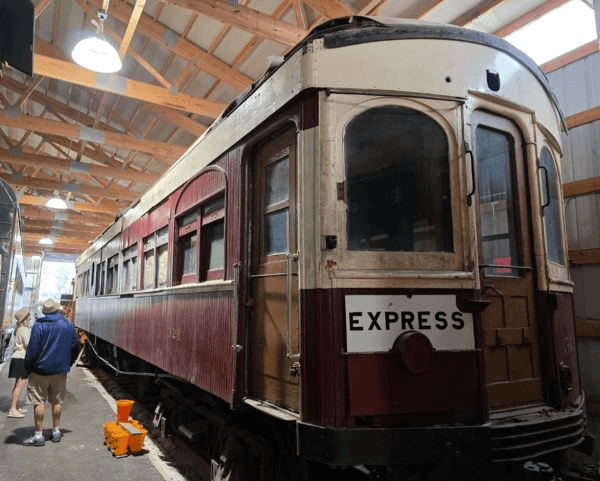
Villa Park is set to welcome a significant piece of its transit history as the Illinois Railway Museum donates the 1914 Chicago, Aurora & Elgin (CA&E) Railway Car 321 to the village.
This 55-foot wooden railcar will undergo restoration before being displayed near the former Ardmore Avenue CA&E station.
The project is a collaborative effort involving the village, the Illinois Prairie Path, labor unions, and two railroad museums.
The CA&E Railway, an electric interurban line, connected west suburban Kane, DuPage, and Cook counties to downtown Chicago from 1902 until passenger services ceased in 1957.
Much of its former right-of-way has been transformed into the Illinois Prairie Path, a popular walking and biking trail.
Plans are underway to position Car 321 at the old Ardmore station, located near the intersection of Ardmore Avenue and Central Boulevard.
Union laborers will restore the exterior to its original condition and refurbish the interior to host community events.
The village intends to construct a short track segment for the railcar and a protective shed to shield it from the elements.
Village officials anticipate that the restored railcar will attract visitors from across the Chicago area, provide a unique public gathering space, and offer an interactive connection to Villa Park's history.
Car 321 is expected to arrive at the old Ardmore station this spring, with much of the restoration work slated for completion by year's end.
The CA&E Railway featured two main branches originating in Elgin and Aurora, converging in Wheaton and continuing to Forest Park.
Trains then utilized 'L' tracks to reach downtown Chicago.
The railway experienced a tumultuous history, including multiple bankruptcies and ownership changes, before passenger operations abruptly ended at noon on July 3, 1957.
In Villa Park, the CA&E had stations at Villa Avenue and Ardmore Avenue.
These station buildings now house the Villa Park Historical Society Museum and the Villa Park Chamber of Commerce, respectively.
Village President Kevin Patrick emphasized the railway's role in Villa Park's development, noting that the Ovaltine factory, a major employer from 1917 to 1985, relied on the interurban railway to transport workers.
"The railway and Ovaltine helped make Villa Park possible," Patrick stated.
He also highlighted that, unlike many suburbs with a single downtown centered around a train station, Villa Park's multiple stations have contributed to the development of three distinct downtown areas.
Many CA&E railcars have been preserved in railroad museums, including the Fox River Trolley Museum in South Elgin and the Illinois Railway Museum in Union.
Car 321 had been stored at the Illinois Railway Museum, where it was used for spare parts.
Ralph DiFebo, a board member of the Illinois Prairie Path corporation, has long envisioned placing a train along the Prairie Path.
His inquiry led to discussions with the Illinois Railway Museum, culminating in the donation of Car 321.
DiFebo reached out to the Village of Villa Park about hosting the railcar, and Village President Patrick saw the project as a meaningful way to connect the community to its history.
"I think Car 321 helps tell the story of innovation, and the labor and growth that went into it," Patrick said.
He believes the interactive nature of the railcar will provide a deeper understanding of the village's past than a sign or plaque could offer.
Patrick also anticipates that the railcar will draw walkers and cyclists using the trail, benefiting local businesses and serving as a communal space for residents and visitors.
"I think it's a long-term place-making investment in Villa Park," he said.
DiFebo added that Car 321 could become a destination along the Prairie Path, encouraging trail users to explore new areas.
"I think (Car 321) is going to become a go-to spot," he said.
"People are going to say, 'let's ride out to the car.'"
Kristin Karl, Villa Park's community and economic development analyst, sees Car 321 as a potential local landmark.
"Maybe this is something the village will be known for—like, Villa Park has a neat train over there," she said.
The railcar will be situated east of the station building, closer to the road.
The village has budgeted $100,000 for the restoration, including building a railroad track segment with a crushed gravel bed and a covered structure with a platform.
Karl and DiFebo noted that this is an initial estimate that may be adjusted once the railcar arrives and a thorough assessment is conducted.
DiFebo mentioned that his organization plans to donate at least $20,000 toward the project.
Members of the Fox River Valley Museum, along with volunteers from the Ironworkers and Carpenters labor unions, have offered their time and expertise.
Patrick looks forward to Car 321's arrival, stating, "I think this project says our history matters. I think it shows Villa Park as a place with deep roots, not just a pass-through suburb."
Karl mentioned potential uses for the railcar, including hosting meet-and-greets with Santa and collaborating with the nearby Villa Park Public Library for programs.
"Right now, we have so many different ideas," Karl said.
"We're talking about having library programs in there, we're talking about meetings in there. There are so many things we can do. The possibilities are endless." |
0 Comments
Join the conversation
Be the first to comment
Share your thoughts above.